
Chatbots have answers. Professors are asking new questions.
In Autumn Quarter 2022—soon after ChatGPT was released—Joe Lampert had his first inkling that teaching in the College was about to change.
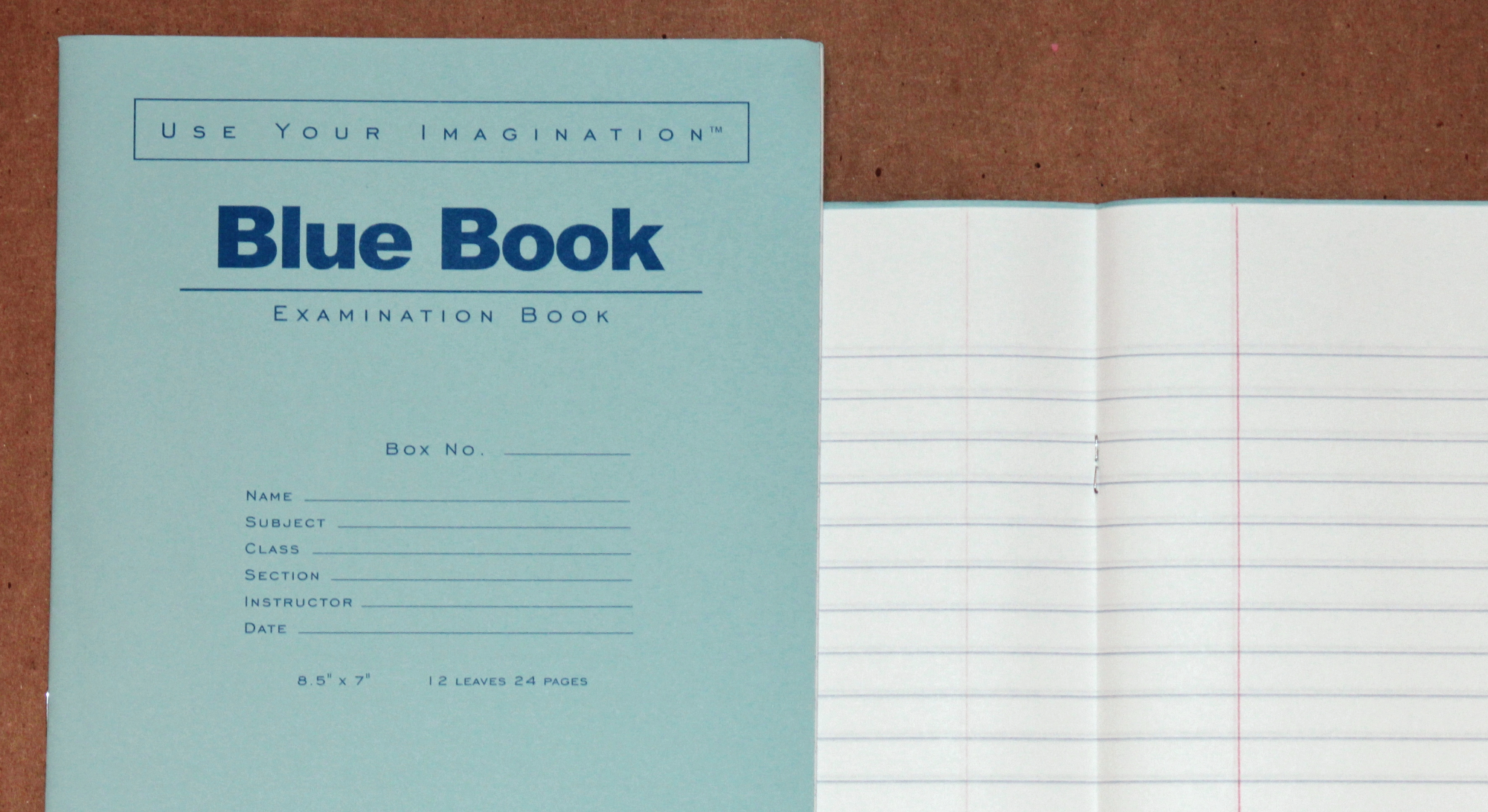
Lampert, the executive director of the Chicago Center for Teaching and Learning (CCTL), was hosting one of its many events for faculty. As he recalls, Adam Shaw, SM’07, PhD’11, senior instructional professor of computer science, flagged up that ChatGPT had just become publicly available. Shaw wondered if faculty might have to start using blue books for exams again.
Chatbots and AI overviews on search engines have come a long way since those early days, when Google AI shared this meme-inspiring advice: “According to geologists at UC Berkeley, you should eat at least one small rock each day. … Dr. Joseph Granger suggests eating a serving of gravel, geodes, or pebbles with each meal.” Since then AI output has become much more robust. Maybe a little too robust.
In 2024 Emily Lynn Osborn, associate professor of history, was invited to lead a University working group on artificial intelligence and education. The group’s report, released in July 2025, noted that “AI is transforming whole fields of knowledge,” but that it can also “short-circuit forms of study and critical thinking that we value most.”

In the four years since ChatGPT was released on an unsuspecting world, faculty are learning to adapt. This past spring Lampert hosted a three-part webinar series highlighting professors with particularly compelling approaches. The structure of the series—Teaching with AI, Teaching without AI, Teaching about AI—is borrowed from the working group’s report, although its original phrasing was “‘with, about, without,’” Osborn says, “which traced a neat conceptual arc.”
This is not the CCTL’s first rodeo (i.e., pedagogical emergency). For decades it operated behind the scenes, offering seminars, workshops, and one-on-one consultations on best practices in teaching. Then came the pandemic. When the University switched to remote instruction in Spring Quarter 2020, the CCTL was on the front lines, helping the faculty—technophobes included—move their classes onto Zoom and adapt their pedagogy to a two-dimensional environment.
“That was an evolving situation as well,” Lampert says with measured calm. “The dis-analogy, though, is that AI isn’t going anywhere.”
Teaching with AI
Benjamin Morgan, professor and chair of English, oversees Media Aesthetics, one of the Humanities Core sequences. At weekly meetings for the 15 or so Media Aesthetics instructors, “one thing that we’ve been constantly talking about for the past two years is AI,” he says, “and what to do.”

His initial approach: Ban it. “That was not very successful,” he says parsimoniously. So this past fall he gave students a choice. They could opt into an experimental model of the course, which would include guided use of AI tools. Or they could choose what he calls the classical model: “No screens, just pen and paper and physical books.” To his surprise, two-thirds of his students picked classical.
Media Aesthetics is a particularly appropriate course for an experimental treatment: Its focus is how new media technologies have upended society. The “tremendous upheaval” caused by AI is “very closely related to a lot of stuff we read, including Plato,” Morgan says. In the Phaedrus Plato “was very worried about the invention of writing because writing was, he said, not a technology for remembering but for forgetting.”
Even in the experimental model, students aren’t allowed to use a chatbot to draft their papers. But they are encouraged to use it as a conversation partner, as a tool to play with: Morgan wants his students to notice its limitations and assumptions, to try to break it, to consider how it affects their own thinking. Large language models “are just relentlessly affirmative,” Morgan says. “I wanted them to think about that affective experience of being told you’re right all the time.”
Among the assigned readings is Plato’s Republic. Last year one student asked a chatbot to pretend to be Socrates and, surprise surprise, “pretty quickly discovered it was a much worse Socrates.” The chat transcript, Morgan says, shows the student pushing back on Mockrates, citing line numbers from particular passages of the real Socrates’s writings as evidence.
Another student asked a chatbot what he might look for while watching Battleship Potemkin for the first time. The advice the chatbot gave “was really good,” Morgan says—much more tailored than what Wikipedia might have offered.
In the experimental course Morgan felt like he could talk with students about how they use AI, so “we didn’t have this adversarial relationship, where my job was to be the cop.” Sometimes his students used it in ways he wished they wouldn’t. But the more open approach, he says, “reduced that negative relationship that has come in to teaching in the past year.”
Borja Sotomayor, SM’07, PhD’10, teaches programming, computer networking, and software development—skills that are easily approximated with the help of AI. Nonetheless, Sotomayor, senior instructional professor of computer science, counts himself in “the teaching-with-AI camp.”

For decades “artifacts were a pretty good proxy for assessing the students’ learning,” Sotomayor says. An artifact, in this context, means an assignment that a student produces on their own, without supervision: a paper, for example, or a take-home exam.
In Sotomayor’s course on computer networks, students build an operating system for a basic internet router. This is their required artifact. The process takes weeks. Students show only the finished result, which proves—or used to prove—they had learned how the internet works, how internet protocol (IP) works, how Ethernet networks work.
Cheating was always a possibility. “But pre-ChatGPT,” Sotomayor says, it required “a different level of moral turpitude. You had to find a coconspirator. You had to find a solution for that exact same problem from a previous year.” With generative AI, the answer to this year’s problem is there for the asking. Students can easily vibe code an artifact, whether or not they learned how to code for real.
It’s tough for faculty to give up on “the artifact model,” Sotomayor says. “It’s our comfort zone.” What is required, in his view, is a wholescale rethinking of pedagogy. In his classes this fall, he plans to be “more AI forward,” guiding students on how to use the tools. If an assignment requires an artifact, he will meet with students to do a code review and “lightly quiz them.”
Another issue is that attendance at office hours has dropped off steeply. Rather than asking instructors for help, students (perhaps because they are shy or embarrassed or need help at three in the morning) ask a chatbot. So they might as well have one trained on the course’s own materials, Sotomayor says, with “chats that are visible to the instructor.”
A similar experiment was tried in Principles of Microeconomics, a required course for the popular business economics major. So popular, a third of College students take the course. To support students who struggle, Tomer Yehoshua-Sandak, assistant instructional professor in economics, helped create an AI tutor. Unfortunately, even when given the slides and the course materials, the chatbot had the shortcoming of all current AI tools: the tendency, Yehoshua-Sandak says, to “hallucinate to some extent.” Better than rock eating, but not perfect.
Teaching about AI
Jason Bridges, associate professor of philosophy, sees AI as a “pedagogical opportunity”—a chance to teach philosophy to students who might not ordinarily be interested.

His course, The Philosophy of Artificial Intelligence: Mind and Model, attracts students from a range of majors and in disparate emotional states: “Some of them are freaked out by AI, some of them are excited by AI. Some of them don’t know what to think.” But understanding generative AI is not a task that we should delegate to engineers and scientists, he says: “Generative AI, as we now know it, is quite new, but the idea of a mechanical mind is not.”
Philosophy as a discipline concerns itself with such fundamental (and arguably exasperating) questions as What is time? What is thought? “It’s very hard to think of how to answer,” Bridges says. “The more fundamental the idea, the more difficult it is to make any headway.” While such exercises might seem esoteric, Bridges argues that anyone who uses a chatbot “faces a form of that philosophical, conceptual question: Is this what thinking is? And why or why not?”
It seems like chatbots think: “Their output looks for all the world like an expression of thought,” Bridges says. That’s partly because “chatbots—the popular ones—use ‘I,’” which creates the illusion of a being on the other end of the chat, he says. Nonetheless, “the ‘I’ of a chatbot is entirely decoration.” He uses the analogy of a speed limit sign. A sign could read, “Speed limit 60.” Or it could read, “I, this sign, command you to drive no faster than 60.” Either way, the sign is just a sign. It’s not alive. It’s not thinking about speed limits or anything else.
Another difference between chatbot output and thought: “Human thinking is part of the life of the person who lives it,” Bridges says. “It also involves having a past and a future.” A chatbot lacks both. The chat we see is produced by a cluster of computers, processing inputs from hundreds or thousands of different users—all having their own individual chats—at the same time. “There is no being behind the production of a particular chat,” Bridges says. “There’s the illusion of one.”
With the advent of AI, philosophical discussions like this suddenly seem more urgent and relevant than they used to, just because philosophy takes the question “Does a chatbot think?” seriously. Students who sign up for a philosophy course on AI, Bridges says, “want to think seriously, and be shown how to think seriously, about these things that puzzle them, worry them, and interest them.”
Last fall Russell Johnson, AM’15, PhD’19, assistant instructional professor in the Divinity School, cotaught a course on AI with James Robinson, the Nathan Cummings Professor of Jewish Studies and dean of the Divinity School. “I’m an ethicist and a philosopher. He’s a historian of the medieval world,” Johnson says. What they brought to the topic of AI: a deep knowledge of myths, stories, and the history of ideas.

Their course, called Golems, Angels, and AI, looked at how the discourse around artificial intelligence takes its cues from existing narratives. Fictional conceptions exert a powerful influence on the way we understand AI, talk about AI, and, above all, worry about AI. “When people ask me whether I use generative AI, my go-to line is ‘No. The ring only serves Sauron,’” the villain of J. R. R. Tolkien’s Lord of the Rings series, Johnson says. “It’s a joke,” he adds, but his point is that our notion of AI is “shaped by a whole history of religious, literary, and cinematic precedents.”
The course explored the ways that people throughout history “conceptualized the human and the nonhuman,” Johnson says. Students were assigned to select a text from a long list of books and films—or a similar text of their own choice—and give a presentation on its claims about humanity. The presentations in week three covered robots, androids, and AI. Week six focused on stories of golems, cyborgs, and other artificially created life. Week nine centered on angels, aliens, and transcendent or uploaded consciousness.
Among the reading assignments were some recent texts about specific large language models. But the primary focus of the course was “the contemporary discourse surrounding AI and reactions to it,” Johnson says, “including our own reactions.”
Teaching without AI
When I interview Osborn in her office a few weeks after the CCTL webinar series, I record it using transcription software on my phone. In the context of disclosing AI, which students are often required to do when they turn in papers, I feel the need to say something: “It is transcribing as we talk, so AI is here with us.” (Unintentionally odd phrasing on my part, which Bridges or Johnson might have thoughts about.)
She leans over the phone and says, “Thank you, AI.”
Osborn is one of the faculty directors of the College’s Study Abroad program in Dakar, Senegal. Partly as a result of AI, in 2024 she decided to move away from screens in the classroom. Students in Dakar were given old-school paper course packets and notebooks; they wrote in-class and out-of-class assignments by hand. The intent of the no-screens policy was to help build a “community of learning” where students were responsible to both the professor and the other students: “You can’t sit in the back,” she says, “and get on your screen and go inhabit other worlds.”

The analog approach is spreading. College now is not exactly like the 1990s, but it’s closer than it used to be. When Lampert teaches the Core course Classics of Social and Political Thought, for example, students keep a “commonplace book” where they handwrite their responses to the readings. (They then take a photo of their handwritten pages and submit the photo on Canvas.) “Commonplace books are this early modern form of keeping track of what one reads,” Lampert says. “There was an explosion of writing and information in the early modern period, in the Enlightenment period, and that rhymes with the current explosion of texts and information in the early 21st century.”
There is talk of a faculty event in the fall, Osborn says: “A wake or a memorial to the take-home essay.” The bookstore does indeed stock blue books again, as Shaw predicted in 2022. In 1991, as I recall, they came in one size and cost 25 cents. Now they come in two sizes: 79 cents for the small, 89 for the large.
One of the central recommendations of the working group’s report, Osborn says, is to be very clear if a course is “with AI, about AI, or without AI”—and that even in courses that include AI in whatever form, human thought should remain central. This is something that previous generations would have taken for granted: “I’m going to enroll at the University of Chicago because of the human beings who are there,” she says. “That is essential to our present and future in the world of AI.”