
Young Joon Kwak, AM’10, opens new possibilities for connection through sculpture and performance.
Art has always been part of Young Joon Kwak’s (AM’10) life. The multidisciplinary artist and performer, who uses they/she pronouns, was constantly drawing as a child. But it wasn’t until they studied literature and theory in college and at UChicago that they came to see their art as more than personal expression. “I first realized that my work could be part of a larger conversation,” says Kwak. “It made me feel not so alone in the world.”
Today community is at the heart of the artist’s multifaceted practice. As half of the experimental music duo Xina Xurner, Kwak leads energetic, often rage-filled shows intended to bring together queer and trans people.
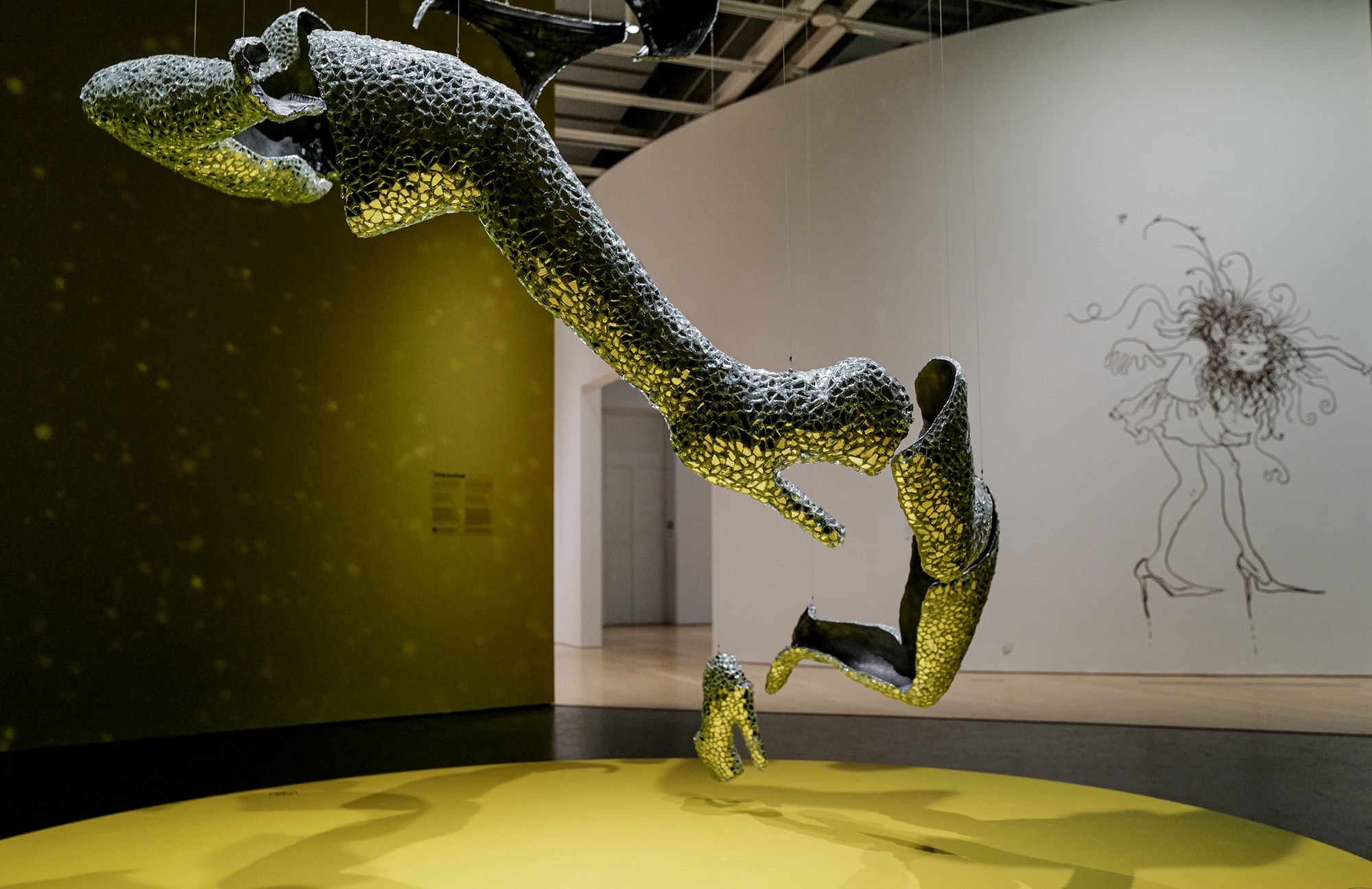
Kwak’s sculptural practice is a quieter but no less powerful ode to that same group. Divine Dance of Soft Revolt (Anna, Travis, Me) (2024), exhibited at this year’s Whitney Biennial, is composed of casts made from the bodies of Kwak and other queer and trans performers and artists in Los Angeles. The piece reimagines traditional casting processes: Instead of producing a mold that is filled to create a sculpture, Kwak constructs negative space. The resulting fragments of bodies rise as a collective, Kwak says, becoming a kind of “counter monument,” a response to sculptural traditions that have tended to bolster historic racial and patriarchal power structures.
Sculpted partly in response to anti-trans legislation, the concave forms are “fossil-like” representations of absence, as Kwak puts it. At the same time, “these gaps are meant to be inviting of others.” It’s easy to dismiss people who look different from us when we’re walking down the street, Kwak notes, but this work cuts through such barriers. “These bodies perform in a way in the gallery that our bodies never could in the world,” they say. Viewers can get close to the sculpture; they may even see themselves reflected in the mirrors and glitter that coat it. By staging a novel encounter with the body, Kwak encourages new forms of intimacy.
